


International masterpieces brought together for the first time
The exhibition brings together several exceptional loans from national and international museums and private collections.
One of the highlights is her impressive work After the Storm, from the Nationalmuseum in Stockholm (Sweden). Other key works include The Lofoten (1884) by her teacher Otto Sinding, from Museum Boijmans Van Beuningen, and her early narrative painting Imperial Flagship off the Island of Skoroya (1892), from the Perspektivet Museum in Tromsø (Norway), showing the arrival of Kaiser Wilhelm II at a whaling station.
“…Betzy Akersloot-Berg was more than simply an exceptional talent: her work shows how, as a woman, she challenged the conventions of her time and carved out a place for herself on the international art scene through large-scale seascapes and coastal views…”, says Marguerite Tuijn, Museum Panorama Mesdag’s guest curator.
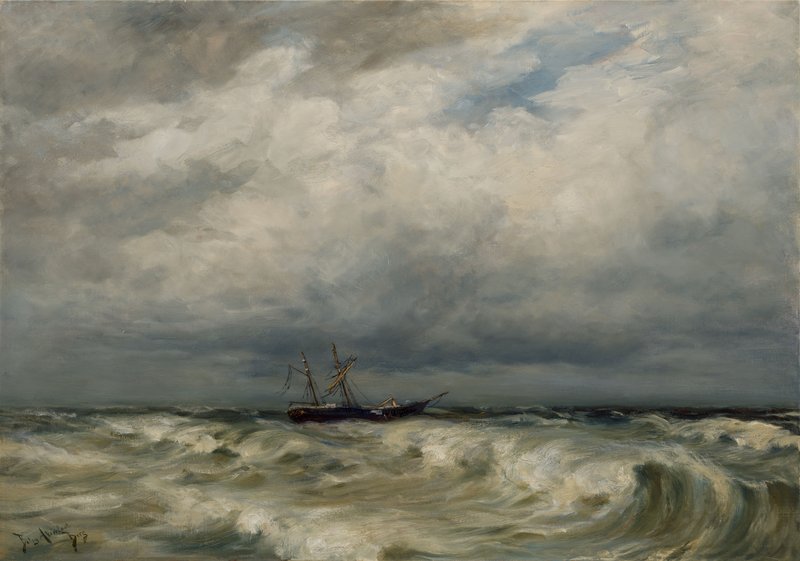
Betzy Akersloot-Berg, After the Storm, 1905 or earlier, Nationalmuseum, Stockholm, Photo: Anna Danielsson / Nationalmuseum
Widely praised
Betzy Akersloot-Berg was highly regarded during her lifetime in both Norway and the Netherlands. The first glowing reviews of her work and her contribution to international exhibitions began to appear in the 1880s.
She was represented in Paris in 1889 at both the Salon and the World Exhibition and in Amsterdam that same year at the Exhibition of Living Masters. The latter event, held on the Damrak, earned her the effusive praise of the Dutch press. A review in the Algemeen Handelsblad on 29 September 1889 went so far as to name her in the same breath as Hendrik Willem Mesdag and Sientje Mesdag-van Houten.
All the same, like many artists of her time, she gradually faded from the collective art-historical memory. Betzy Akersloot-Berg. One of a kind draws attention to her work once again and offers her the recognition she deserves.
An entrepreneurial and forward-thinking artist
Betzy Akersloot-Berg was ahead of her time. She was among the first artists in the Netherlands to actively protect her copyright and deliberately built an international career. With Norwegian coastal landscapes in the Netherlands and Dutch seascapes in Norway, she reached audiences across Europe.
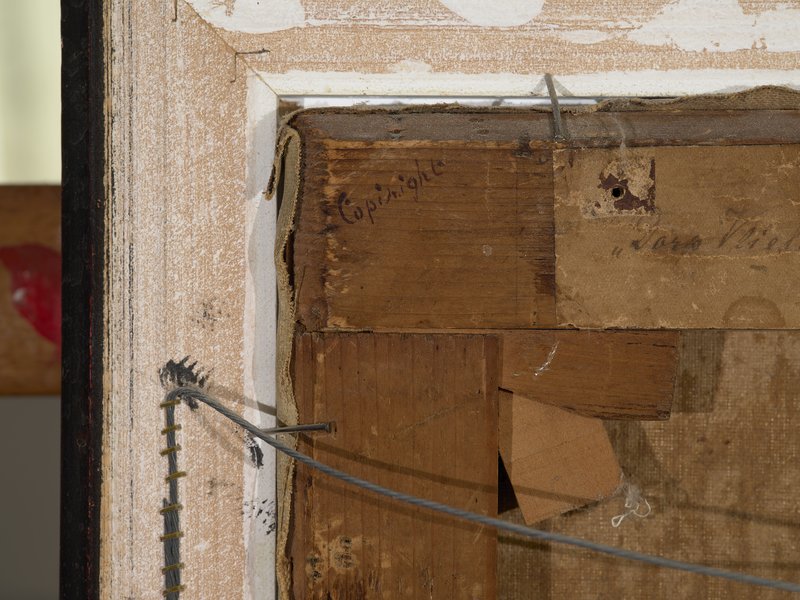
Betzy Akersloot-Berg, Village, Vlieland (reverse side), 1896 or later, private collection. Photo: Piet Gispen Photography, The Hague.


Close friendship with the Mesdags
During an international exhibition in Vienna in 1882, the then unmarried Betzy Berg encountered the work of Hendrik Willem Mesdag (1831-1915). His seascapes made a profound impression on her and were an important reason for her later move to The Hague. There, she actively sought contact with Mesdag to further develop her interest in maritime painting. This contact grew into a close friendship with both Hendrik Willem Mesdag and Sientje Mesdag-van Houten (1834-1909), offering new insight into her position within the Hague art world. Recent research shows that she did not arrive in The Hague as a beginner, but as an already established and ambitious artist.

H.W. Mesdag, Rough Sea, 1894, Museum Panorama Mesdag, Piet Gispen Photography, The Hague.
Vlieland
After her marriage to the Dutchman Gooswinus Akersloot, Betzy Akersloot-Berg settled on the island of Vlieland. From her home, now Museum Tromp’s Huys, she worked for decades on a substantial oeuvre in which sea, coastlines and changing weather conditions play a central role. The island became her main source of inspiration, while she remained internationally active. From Vlieland, she regularly travelled across Europe and maintained her artistic network.
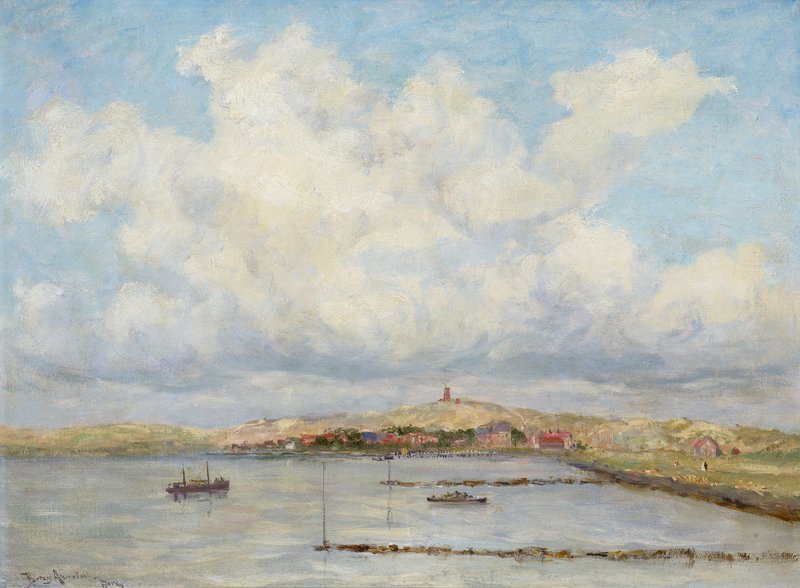
Betzy Akersloot-Berg, View of Oost-Vlieland, 1896 or later, Collection of Museum Tromp’s Huys, Vlieland. Photo: Piet Gispen Photography, The Hague.
International collaboration
The exhibition has been organised in close collaboration with Museum Tromp’s Huys on Vlieland, which oversees the world’s largest collection of Akersloot-Berg’s work, with the Nordnorsk Kunstmuseum and Perspektivet Museum in Tromsø (Norway), and with the Nationalmuseum in Stockholm (Sweden).
Additional loans have been provided by several private collectors, the Museum Hannemahuis (Harlingen), Museum het Behouden Huys (Terschelling), the Frans Hals Museum (Haarlem), Museum Boijmans van Beuningen (Rotterdam), and The Royal Collections of the Netherlands and The Mesdag Collection (The Hague). Marguerite Tuijn is the exhibition’s guest curator.
Supported by: Ministerie van Onderwijs, Cultuur & Wetenschap, Gemeente Den Haag, Vrienden van Mesdag, Ambassade van het Koninkrijk Noorwegen & SRC Reizen


